
Standing Seam Metal Roofing in Florida
Concealed-fastener metal roofing installed by a licensed Florida roofing contractor. Built to handle hurricane winds, coastal humidity, and decades of Florida sun.
Licensed Florida Roofing Contractor · Free Estimates · Standing Seam Specialists
What Is Standing Seam Metal Roofing?
Standing seam metal roofing is a concealed-fastener roofing system made up of continuous vertical metal panels that run from the ridge of the roof down to the eave. Instead of exposed screws or nails driven through the panel face, standing seam panels lock together at their raised seams — the "standing" part — using a mechanical or snap-lock connection. The fasteners that hold the system to the roof deck are hidden completely inside those seams.
Each panel is attached to the roof using floating clips rather than fixed fasteners. The clips allow each panel to expand and contract with temperature changes without buckling, oil-canning, or cracking the finish. This thermal float is engineered into the system — it is not an afterthought.
Because no fastener ever pierces the panel face, there is no exposed fastener hole that can back out, rust, or admit water. The seam itself is the weather barrier. That design difference is why standing seam carries longer manufacturer warranties, achieves higher wind-uplift ratings, and holds up better over decades compared to exposed-fastener metal panels or three-tab and architectural shingles.
Concealed Fasteners
High Wind-Uplift Rated
Thermal Float System
Why Standing Seam Performs Better in Florida
Florida's climate is hard on roofs — hurricane-force winds, daily thermal swings, salt air near the coast, and relentless UV exposure. Standing seam metal roofing is engineered to handle all of it.
Superior Wind Uplift Resistance
Standing seam systems routinely achieve Florida Building Code-compliant wind-uplift ratings. Because the clips distribute load across the full panel length, there are no weak fastener points where wind can peel back a panel edge.
Zero Exposed Fastener Leak Points
Exposed-fastener metal panels have hundreds of screw holes through the panel face. Each one is a potential entry point for water as screws back out or neoprene washers age. Standing seam eliminates every one of those leak points.
Handles Florida's Daily Heat Cycles
Metal expands and contracts significantly between a Florida summer afternoon and a winter morning. The floating clip system lets panels move freely, preventing the stress cracks and fastener loosening that occur in rigidly fastened systems.
40–70 Year Service Life
A properly installed standing seam metal roof can outlast two or three shingle roofs on the same house. In Florida's demanding climate, that durability translates directly to lower lifetime roofing costs.
Minimal Ongoing Maintenance
Without exposed fasteners to inspect, re-torque, or seal, routine maintenance is straightforward — clear debris from valleys and gutters and schedule periodic professional inspections.
Reflective Finish Reduces Cooling Load
Cool-roof metal finishes reflect solar energy rather than absorbing it. In Florida, a reflective standing seam roof can reduce attic heat gain and lower air-conditioning energy use during the long cooling season.
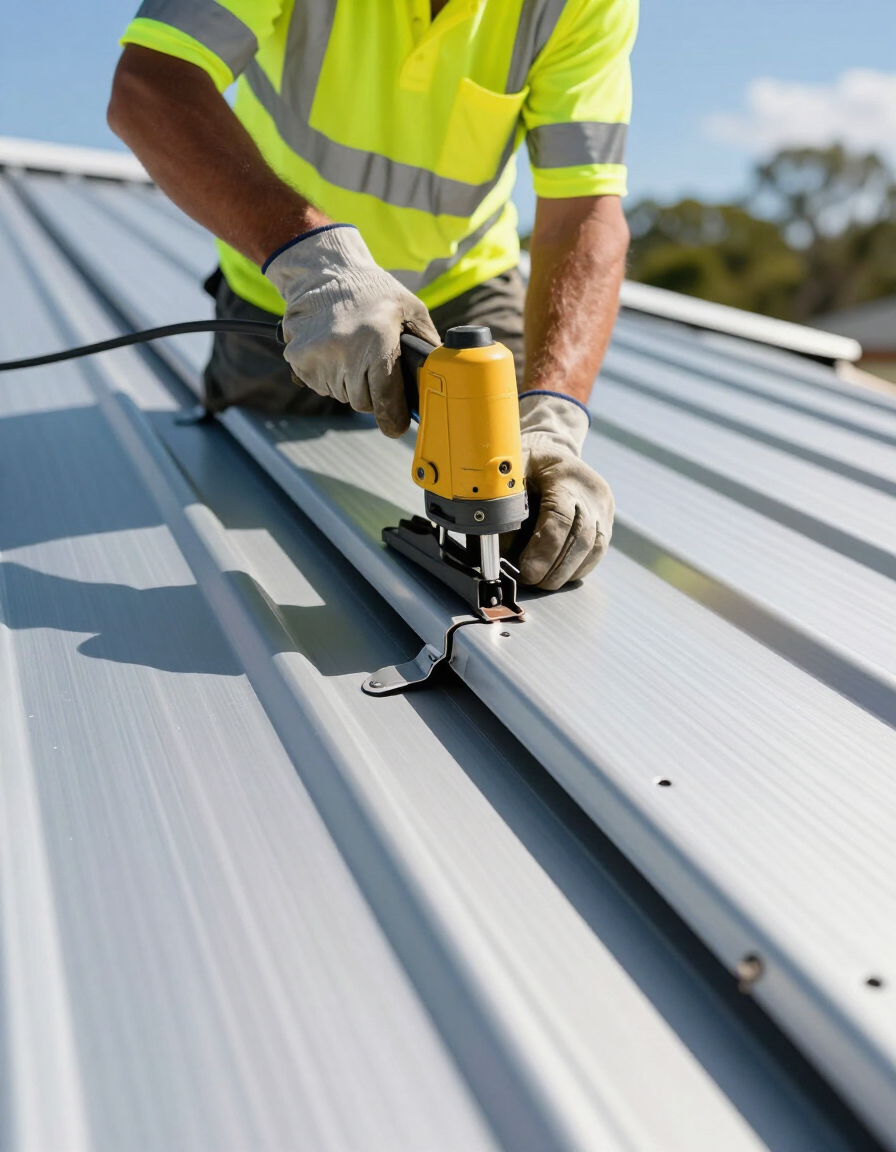
How Atlantic Pro Roofing Installs Standing Seam
Installation quality is the difference between a standing seam roof that performs as designed and one that fails prematurely. Our process follows manufacturer specifications and Florida Building Code requirements at every step.
1. Substrate and Underlayment
We start with a thorough inspection of the roof deck. Any deteriorated sheathing is replaced before we install a high-temperature synthetic underlayment rated for metal roof applications. Proper underlayment is critical in Florida's heat and rain cycles.
2. Panel Forming
Standing seam panels can be roll-formed on-site to the exact length of each roof slope, eliminating horizontal lap joints that are common in shorter pre-formed panels. Continuous panels from ridge to eave are a significant performance advantage.
3. Clip Attachment
Floating clips are fastened to the roof deck at engineered spacing to meet the required wind-uplift rating for the installation location. No fastener ever penetrates the face of the metal panel.
4. Panel Seaming
Panels are snapped or mechanically seamed together at the raised ribs. Mechanical seaming locks the panels with a tight double-fold that remains watertight through decades of thermal movement.
5. Flashings and Trim
Ridge caps, rake edges, eave trim, valley flashings, and pipe penetrations are finished with coordinated metal components. Proper flashing detail is where most roof failures originate — we treat it as a critical phase, not a finishing step.
Completed Standing Seam Projects
Aerial drone photography of finished standing seam metal roofing installations completed by Atlantic Pro Roofing in Florida.


Standing Seam Metal Roofing — Common Questions
Answers to the questions Florida homeowners ask most often before choosing standing seam metal roofing.
How much does standing seam metal roofing cost compared to exposed-fastener metal panels?
Standing seam is more expensive than exposed-fastener metal roofing — typically meaningfully higher per square foot installed — because the panel forming process, clip hardware, and seaming labor are more involved. The trade-off is a system with no exposed fastener leak points, a longer service life, and higher wind-uplift ratings. For homeowners planning to stay in their home long-term, the lifecycle cost comparison often favors standing seam. We provide detailed written estimates so you can evaluate the numbers for your specific roof.
What panel profiles are available for standing seam roofing?
The two most common residential profiles are snap-lock and mechanically seamed. Snap-lock panels connect with a simple snap and are well-suited to most residential pitches. Mechanical seam panels are folded with a seaming tool for a tighter lock and are used on lower-slope applications or where maximum wind performance is specified. Panel rib height and width vary by manufacturer and product line. We walk through the options during your estimate consultation.
Can standing seam be installed over my existing shingle roof?
In some cases, yes — standing seam can be installed over existing shingles using a batten or hat-channel system, which eliminates a tear-off and adds a thermal air gap. Whether a recover is appropriate depends on the condition of the existing roof, the number of existing shingle layers, and local code requirements. We evaluate the existing roof during the estimate and give you an honest assessment.
Is standing seam metal roofing noisy in Florida rain?
Standing seam installed over a solid roof deck with underlayment is not significantly louder than shingles in rain. The deck and underlayment act as sound dampening layers. Open-frame installations without a solid deck can produce more noise, but that is not typical in Florida residential construction.
What color options are available?
Standing seam metal roofing is available in a wide range of factory-applied finishes — typically PVDF (Kynar) or polyester coatings — in dozens of standard colors including charcoal grays, earth tones, and classic Galvalume mill finish. Many manufacturers offer Florida-approved cool-roof colors with high solar reflectance index values. We bring color samples to your estimate appointment.
How long does a standing seam metal roof installation take?
Most residential standing seam projects are completed in two to five days depending on roof size, complexity, and whether a tear-off is required. We provide a project timeline before work begins so you know what to expect.
Thank you — we'll be in touch shortly to schedule your free estimate.
Get a Free Standing Seam Estimate
Atlantic Pro Roofing installs standing seam metal roofing across Florida. Licensed contractor, written estimates, no pressure.
• Licensed Florida Roofing Contractor
• Concealed-Fastener Standing Seam Specialists
• Free, Written, No-Obligation Estimates
• Financing Options Available